
or: A Rant on How Much I Hate CERTAIN VERY SPECIFIC HISTORICAL REFERENCES as Endings (Spoilers)
Last year I purchased My Year of Rest and Relaxation by Ottessa Moshfegh. One of my favorite local bookstores, First Light Books, included it as a recommendation for their “No Plots, Just Vibes” Instagram carousel. Naturally, I kept it on my bookshelf for a year before reading it this summer.
I liked this book overall – it’s funny and had enough of a plot to keep the novel moving. But I hated the ending so much (SO MUCH. SO MUCH!) that it’s tainted how I feel about the novel as a whole.
Our unnamed narrator is a college graduate living in 2000-2001 Manhattan. On paper, she has everything going for her – she’s a Columbia graduate and is living off her inheritance. But she’s deeply unhappy. We meet her as she’s numbing herself with medication so she can sleep for days at a time. After getting multiple prescriptions from a sketchy psychiatrist, our narrator decides she will sleep through an entire year – her year of “rest and relaxation,” while shutting out everything and everyone from her life – her memories of her difficult relationship with her now-dead parents, her ex-boyfriend, her job, and her best frenemy, Reva. But her decision to sleep for a year isn’t as easy to execute as she’d envisioned.
Our narrator is objectively not a great person – she is self-absorbed, actively tries to sleep with her ex-boyfriend, who is in another relationship, is consistently rude and disparaging to Reva, her supposed best friend, and says some racist stuff.
Multiple Goodreads reviews lament how terrible the narrator is, but I think it’s one of the stronger aspects of the novel. I like imperfect characters, and I support the decision of making your narrator a bad person. Moshfegh gives us just enough backstory with the narrator’s difficult childhood for us to understand why she’s struggling so much.
As a quick aside – I took a writing class during the pandemic, and for one of the workshops, we evaluated a piece involving a predatory relationship between a teenager and adult. I cringe when I recall my feedback to the author; I don’t remember exactly how I phrased it, but I basically told her this relationship was wrong and she shouldn’t write it. EEEK. Obviously, such a “relationship” in real life is a deplorable crime. HOWEVER. We shouldn’t avoid writing characters that are morally repugnant. Art is supposed to be reflective of real life, and there are many terrible people wandering this planet. We shouldn’t scrub characters if they’re not representative of ourselves. They’re not supposed to be. And as readers, we shouldn’t expect all of the characters we encounter to be relatable.
Like I said, I would have liked this book more if not for the ending. From here on out, it’s spoiler city, so if you care about reading this book or don’t want other movies spoiled –
GET OUT.
NOW.
Thank you.
As soon as the narrator ever-so-casually notes that a character works at the World Trade Center, my internal monologue sighed heavily and said, “Fuck.”
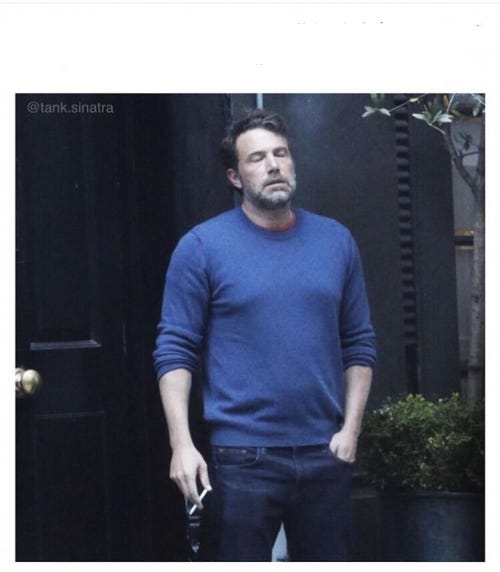
There is no way around it. The author wouldn’t drop this detail in a novel set in 2001 NYC for nothing. These are Chekhov’s Twin Towers. We are getting a BAM! 9/11 ending.
What is a BAM! 9/11 ending? It’s when a writer decides to rely on the shock value of ending a story by putting a character(s) (A) on one of the planes about to hit the Twin Towers or (B) in the Twin Towers on 9/11.
My first encounter with the BAM! 9/11 ending was a collection of short stories I read in 2006 or 2007. I cannot remember the author or the title of the story (that’s probably for the best). The story was structured as a series of vignettes, of a couple holding each – while cheating on their respective spouses with each other, starting their lives together, etc. The story ended with the two embracing as their plane was about to hit the World Trade Center.
I remember staring at the book on my bed after I finished the story. What the fuck did I just read?
Another more famous example is Remember Me, a romantic drama from 2010 starring Robert Pattinson and Emilie de Ravin. It ends with this:
WHAT.
To be fair, I haven’t seen this movie, though I thought about watching it as research for this post before deciding I didn’t care that much. But according to the internets, this ending came out of nowhere.
To be clear, I’m not one of those “too soon” kind of people and I’m not against its use as a narrative device. While we shouldn’t avoid storytelling against a tragic backdrop, using these tragedies as surprise endings ultimately cheapens the story your audience spent hours immersing themselves in. You can’t shove that level of gravity into a story that didn’t already have the narrative structure in place to handle it.
Let’s examine how My Year of Rest and Relaxation handles this ending. In the penultimate chapter, our narrator is sober and learning how to live with her feelings instead of numbing them. She finally considers selling her dead parents’ home and carries her real estate agent’s letter with her to Central Park.
“There was majesty and grace in the pace of the swaying branches of the willows. There was kindness. Pain is not the only touchstone for growth, I said to myself. My sleep had worked. I was soft and calm and felt things. This was good. This was my life now. I could survive without the house. I understood that it would soon be someone else’s store of memories, and that was beautiful. I could move on.”
This would have been a perfectly lovely ending. We see real growth here, and there’s an inherent relief that the narrator is allowing herself to feel. But instead, we get this:
“On September 11, I went out and bought a new TV/VCR at Best Buy so I could record the news coverage of the planes crashing into the Twin Towers. Trevor was on a honeymoon in Barbados, I’d later learn, but Reva was lost. Reva was gone. I watched the videotape over and over to soothe myself that day. And I continue to watch it, usually on a lonely afternoon, or any time I doubt that life is worth living, or when I need courage, or when I am bored. Each time I see the woman leap off the Seventy-eighth floor of the North Tower – one high-heeled shoe slipping off and hovering up over her, the other stuck on her foot as though it were too small, her blouse untucked, hair flailing, limbs stiff as she plummets down, one arm raised, like a diver into a summer lake – I am overcome by awe, not because she looks like Reva, and I think it’s her, almost exactly her, and not because Reva and I had been friends, or because I’ll never see her again, but because she is beautiful. There she is, a human being, diving into the unknown, and she is wide awake.”
OK.
SO.
I have a couple of thoughts.
- Again, what.
- Why?
- Is this even necessary?
“But wait,” you say. “The author noted that Reva works in the World Trade Center earlier in the novel, so you were already expecting a 9/11-related ending. Maybe the ending is supposed to represent the shock that residents felt when it happened? They didn’t know it was coming.”
And I would answer, fair points. Like I said, I have no issue with 9/11 being used as a narrative structure. And by setting up her novel in early 2000s NYC, Moshfegh did erect a scaffold for this narrative turn. But to shoehorn it as the ending and to say that the character was wide-awake while falling to her death after our narrator spent the entire novel numbing herself to sleep is so on-the-nose that it’s gross. Ultimately, the scaffolding isn’t enough to sustain this ending, and it still feels cheap, even with the foreshadowing.
Ultimately, I gave this book three stars out of five – it was an enjoyable read until the end, which I hated, but it did made me think about why I hated it.
If you read this book, I’d love to hear your thoughts about the ending and whether it worked for you or not.
Categories: Books
 Jennifer Stark
Jennifer- I didn’t read the book but I am impressed by your review. Obviously, you have an extensive knowledge of writing. The dramatic , descriptive , out of the blue actions highlight why I don’t read much fiction. I have trouble stepping into someone else’s fantasy. Thanks so much for sharing! Love you mucho, molto!
LikeLike
I totally agree!!! I watched Remember Me and was so thoroughly disgusted by the ending – it felt like a jump scare, thrown in just for a cheap audience reaction. Made me hate the whole movie.
LikeLike